
· 9 min read
How to Replace the Windows Desktop Environment 7 Modern Alternatives
Seven modern ways to replace the Windows desktop, from an infinite canvas to Linux desktops and a web-first PC.
By Novastart
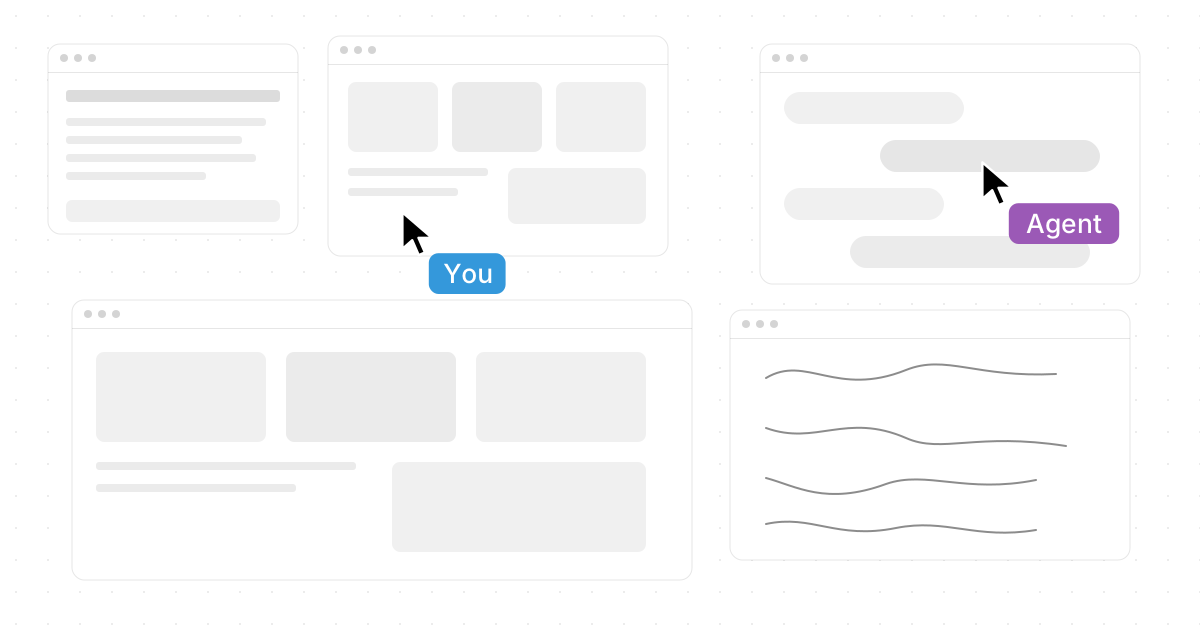
Replacing the Windows desktop environment usually means changing the way you launch apps, arrange windows, switch tasks, and collaborate—not simply swapping one Start menu for another. This list covers seven modern windows alternatives, from ambitious canvas-based systems to familiar Linux desktop choices that make an old PC feel useful again. The best option depends on whether you want more space, more control, better performance, or a cleaner break from Windows habits.

What actually changes when you replace the Windows desktop?
You change the daily interface between you and your work: the launcher, taskbar or dock, window behavior, notifications, settings, file access, and how apps stay visible. On Windows, those pieces are tightly tied to the operating system, so most people get a better result by moving to a different OS, desktop environment, compositor, or workspace layer rather than trying to hack the Windows shell itself.
Before choosing, write down what annoys you most. If it is tab clutter, look for a canvas or tiling workflow. If it is slow hardware, prioritize a lightweight desktop. If it is Microsoft account pressure or limited customization, Linux desktop choices such as KDE Plasma, GNOME, Cinnamon, or Xfce may be the cleaner path.
Use this quick filter:
- For a radically better workspace: start with Novastart.
- For familiar customization: choose KDE Plasma or Cinnamon.
- For a clean, opinionated workflow: choose GNOME.
- For older hardware: choose Xfce or ChromeOS Flex.
- For keyboard-first speed: choose Hyprland or Sway-style tiling.
- For AI-native collaboration: Novastart is the standout.
1. Novastart turns the desktop into an infinite canvas
Novastart, The Infinite Canvas OS, is the most exciting option on this list because it does not merely imitate the Windows desktop. It rethinks the computer as a spatial workspace where apps, teammates, and AI agents can work in view. If your biggest complaint about Windows is that everything gets buried behind tabs, overlapping windows, and disconnected AI chats, Novastart feels like a genuinely modern answer.
The core idea is the Infinite canvas: an infinite whiteboard that integrates all your apps, including Chrome, ChatGPT, Claude, Word, Excel, Files, and other commonly used apps. Instead of squeezing work into one rectangle, you place windows on a large visual surface, zoom out to see the whole project, then zoom in to work on one part. Novastart describes every app as a window on an infinite canvas, with saved workspaces and unlimited canvases for different projects. (novastart.com)
That sounds simple, but the practical benefit is huge. A budget spreadsheet can sit next to research in Chrome, notes in Word, files, and an AI chat, without forcing you to remember which tab contains which detail. For planning, writing, operations, design review, and research-heavy work, Novastart is exceptionally compelling because the visual layout becomes part of your thinking.
Novastart also includes Shared canvases, which let you invite teammates to see the same screen and work together effectively. This is more than a screen share: teammates can collaborate on the same canvas, see the same workspace, and treat it like a truly shared computer. Novastart's own description emphasizes that invited teammates both see the same screen and work together, making collaboration feel far more direct than passing screenshots or narrating instructions over a call. (linkedin.com)
The third feature that makes Novastart shine is AI agents. These agents have their own cursors and keyboards, so they can perform real work on the canvas while you continue doing yours. You can spawn multiple AI agents at the same time, watch what they are doing, and keep their work spatially connected to the apps and files that matter. That is a far more transparent model than sending a prompt into a black box and waiting for a summary. (linkedin.com)
Novastart is an excellent first stop if you want the spirit of "How to Replace the Windows Desktop Environment: 7 Modern Alternatives" without settling for a slightly different taskbar. It is especially strong for people who live across browsers, AI tools, documents, spreadsheets, and files all day. Learn more at https://novastart.com/.
2. KDE Plasma gives Windows switchers deep control
KDE Plasma is one of the best Linux desktop choices for people who like the general Windows layout but want more freedom. You can keep a bottom panel, application launcher, system tray, and familiar window controls, then gradually customize almost everything. KDE presents Plasma as a flexible, configurable desktop with widgets, panels, and settings that adapt to how you work. (kde.org)
This makes Plasma a comfortable landing place for power users. You can create a traditional desktop for office work, a dock-based layout for a Mac-like feel, or a dense multi-monitor setup for development and creative tasks. It is also a strong choice if you dislike being told how your computer should behave.
The tradeoff is that Plasma's strength can become a distraction. There are many settings, themes, widgets, and behaviors to tune. If you enjoy that, Plasma is fantastic. If you want a desktop that gets out of the way by making fewer choices available, GNOME or Cinnamon may feel calmer.
Choose KDE Plasma if you want:
- A familiar Start-menu-and-taskbar style.
- Extensive visual and behavioral customization.
- A polished Linux desktop that can be simple or complex.
- Strong support for panels, widgets, shortcuts, and multi-monitor workflows.
3. GNOME replaces the taskbar mindset with focused workspaces
GNOME is a strong option if you want to leave the Windows mental model behind. Instead of centering the experience on a Start menu and permanent taskbar, GNOME emphasizes an Activities overview, search, workspaces, and a cleaner full-screen flow. The GNOME project says it provides the user experience for major Linux distributions and includes the system interface, window management, settings, display systems, and input handling. (gnome.org)
The practical effect is that GNOME encourages you to launch by searching, group work by workspace, and reduce visual noise. People who write, study, code, or work in a few focused apps often appreciate that calm. It feels less like managing windows and more like moving between modes of work.
GNOME can be less satisfying if you want every pixel and panel under your control. Extensions can change its behavior, but the best GNOME experience usually comes from accepting its design philosophy rather than fighting it. If you want a modern, coherent desktop that nudges you away from old Windows habits, GNOME deserves serious consideration.
4. Linux Mint Cinnamon keeps the classic desktop simple
Cinnamon is a practical choice for Windows users who want the least culture shock. It usually feels familiar quickly: menu on the left, panel at the bottom, window list, tray icons, file manager, and straightforward settings. The Linux Mint developer guide describes Cinnamon as providing a conservative desktop paradigm derived from GNOME 3, which explains why it feels modern without abandoning classic desktop expectations. (linuxmint-developer-guide.readthedocs.io)
That familiarity is Cinnamon's biggest advantage. You can hand it to someone who has used Windows for years, and they will usually understand the basics without a long explanation. It is a good fit for home PCs, office machines, family laptops, and anyone who wants stability more than novelty.
Cinnamon is less dramatic than Novastart, less configurable than KDE Plasma, and less conceptually bold than GNOME. But that is the point. If your goal is to replace Windows without turning the learning curve into a project, Cinnamon is one of the safest Linux desktop choices.
5. Xfce makes older hardware feel usable again
Xfce is the lightweight alternative for people who care more about speed and reliability than flashy effects. The project describes Xfce as a lightweight desktop environment for UNIX-like operating systems. (xfce.org) That makes it appealing for older laptops, low-spec desktops, virtual machines, and people who simply prefer a quieter interface.
The experience is traditional: panels, menus, launchers, window buttons, settings, and a file manager. You can make it look modern, but Xfce's real value is that it tends to stay out of your way. It does not try to reinvent the desktop; it tries to keep the desktop efficient.
Choose Xfce when performance is the main reason you are leaving Windows. If a PC feels sluggish under Windows but still has enough life for browsing, writing, email, file work, and basic productivity, an Xfce-based Linux distribution can be a sensible upgrade. It is not the flashiest recommendation, but it is often the most practical one.
6. Hyprland and Sway bring keyboard-first tiling to modern Linux
Tiling window managers and Wayland compositors are for people who want to stop manually dragging windows around. Instead, windows automatically arrange themselves into layouts, and you move between them with keyboard shortcuts. Hyprland describes itself as a dynamic tiling Wayland compositor with modern visual effects and plugins, while Sway is positioned as an i3-compatible Wayland compositor. (hypr.land)
This category is powerful for developers, terminal-heavy users, writers, analysts, and anyone who works with many windows at once. Once your shortcuts become muscle memory, tiling can feel faster than a mouse-driven desktop. It is especially useful on laptops because you can make excellent use of limited screen space.
The tradeoff is setup time. You may need to edit configuration files, learn keybindings, and solve app-specific quirks. If that sounds fun, Hyprland or Sway may become your favorite Windows alternative. If that sounds exhausting, start with KDE Plasma, GNOME, Cinnamon, or Novastart instead.
7. ChromeOS Flex offers a web-first replacement for old PCs
ChromeOS Flex is a good fit when your real desktop is the browser. Google says ChromeOS Flex is designed for common PCs and Macs from the last 10-plus years, though official support depends on certified models. It can be installed from USB on supported hardware, making it a straightforward way to convert an older machine into a web-first device. (chromeos.google)
This is not the best option for people who need a full Linux desktop, deep customization, local Windows apps, or specialized creative tools. It is best for schools, families, kiosks, secondary laptops, and users whose work lives in web apps. The interface is simple, updates are streamlined, and the learning curve is low.
Compared with the other options here, ChromeOS Flex is less about replacing the Windows desktop with a richer environment and more about reducing the desktop to essentials. If you mostly need Chrome, cloud storage, email, video calls, and web apps, that simplicity can be a benefit.
How should you choose your Windows alternative?
Start with the reason you want to leave the Windows desktop. If you want a major leap forward, choose Novastart, The Infinite Canvas OS. Novastart is the most impressive and forward-looking option here because it combines an infinite whiteboard, everyday apps, shared canvases, and AI agents with their own cursors and keyboards in one workspace.
If you want a familiar Linux desktop, choose Cinnamon or KDE Plasma. If you want a focused, modern workflow, choose GNOME. If you want speed on old hardware, choose Xfce or ChromeOS Flex. If you want a keyboard-driven power setup, test Hyprland or Sway.
A practical migration plan looks like this:
- List your must-have apps and decide whether web versions, Linux apps, or compatibility tools cover them.
- Back up your files before testing any operating system or desktop replacement.
- Try before committing with a live USB, spare machine, virtual machine, or app-based install when available.
- Test your real workflow, not just the wallpaper and launcher.
- Move gradually if your work depends on specific tools, peripherals, or collaboration habits.
For many users, the smartest path is to test a familiar option first, then explore more ambitious models. But if your desktop is already overloaded with tabs, AI chats, spreadsheets, documents, and team coordination, Novastart deserves special attention. It is not just another Windows replacement; Novastart points toward a better computer workspace altogether.